

What Kotahi publishes
Awaiting review. Converted automatically from the retired kotahi.community documentation (archived 13 July 2026). The steps and screenshots have not yet been checked against a current Kotahi release and may be out of date. Converted from docs.kotahi.community/getting-started/content.html.
In this section
Section titled “In this section”- Types of Content Kotahi Can Publish
- Where Kotahi Can Publish To
- Some Configuration Options
- Video Covering These Topics
Kotahi is highly configurable and can publish a wide variety of research outputs. Here are some of the main options:
Types of content
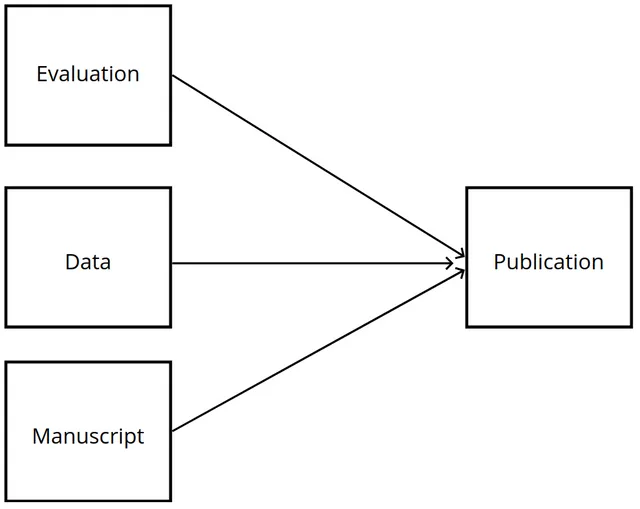
Section titled “Types of content”- Evaluations - Review content and decision summaries from the peer review process. This could include full verbatim reviews or edited excerpts.
- Data - Datasets, metadata, code, multimedia, and other supplementary files.
- Manuscripts - Preprints, journal articles, conference papers, micropublications, and other scholarly documents.
Publishing destinations
Section titled “Publishing destinations”- Internal CMS - Kotahi has a built-in content management system (CMS) to display content. The CMS is customisable to fit your needs.
- External endpoints - Kotahi can publish to any external endpoint or system provided it can receive the data. This includes institutional repositories, preprint servers, journals, archives, social media, and more.
- Multiple targets - Content can be published to the internal CMS, external endpoints, or both simultaneously.
Configuration Options
Section titled “Configuration Options”Kotahi allows flexible configuration of publishing in various ways:
- publish any combination of evaluations, data, and manuscripts or none at all
- publish to single or multiple endpoints
- customise metadata, identifiers, licenses, formatting, layouts, and more
In summary, Kotahi enables publishing virtually any scholarly content anywhere through a highly configurable system.